
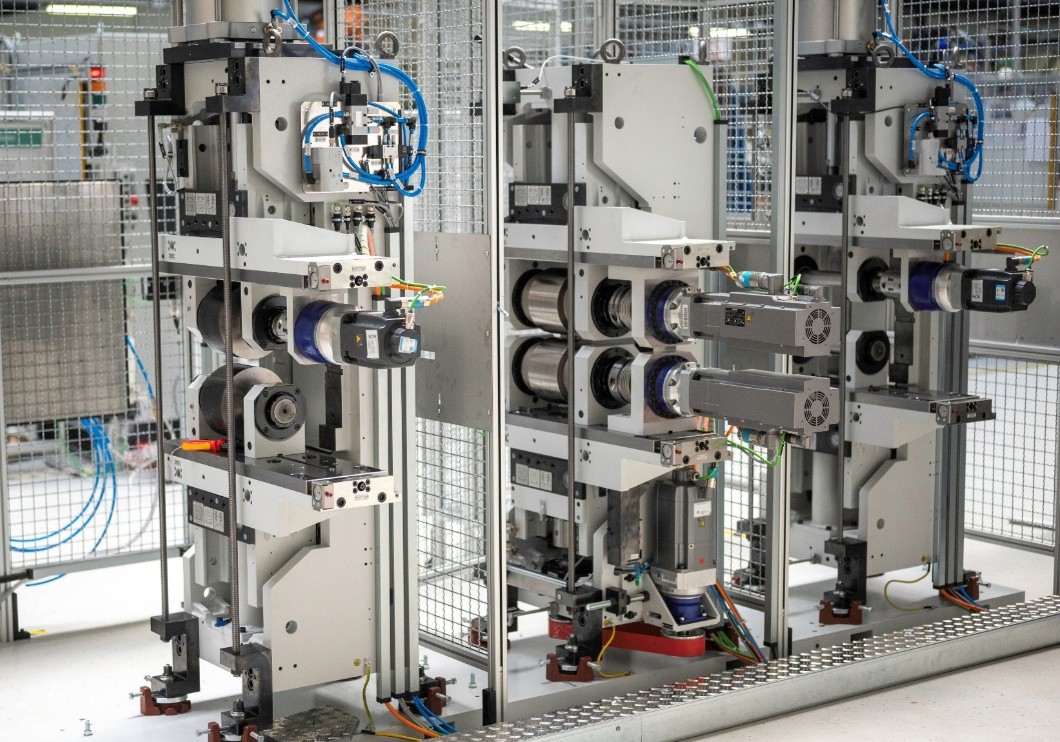
BPPflexROLL
For compact, fine components
- High production rates
- up to 120 BPHP/min
- Max. strip speed
- 46 m/min (D245)
- Max. production width
- 250 mm
- Max. torque
- 1,800 Nm
- Sheet thickness
- 0.05–0.1 mm
- Max. rolling force
- 75 kN
- Roll diameter
- 240–310 mm
Up to 120 half-plates per minute – hollow-emboss rolling is an efficient, resource-saving forming process that offers clear advantages over conventional methods, especially when producing complex component geometries. The BPPflexROLL and flexROLLmax set new benchmarks for scalable bipolar-plate production.
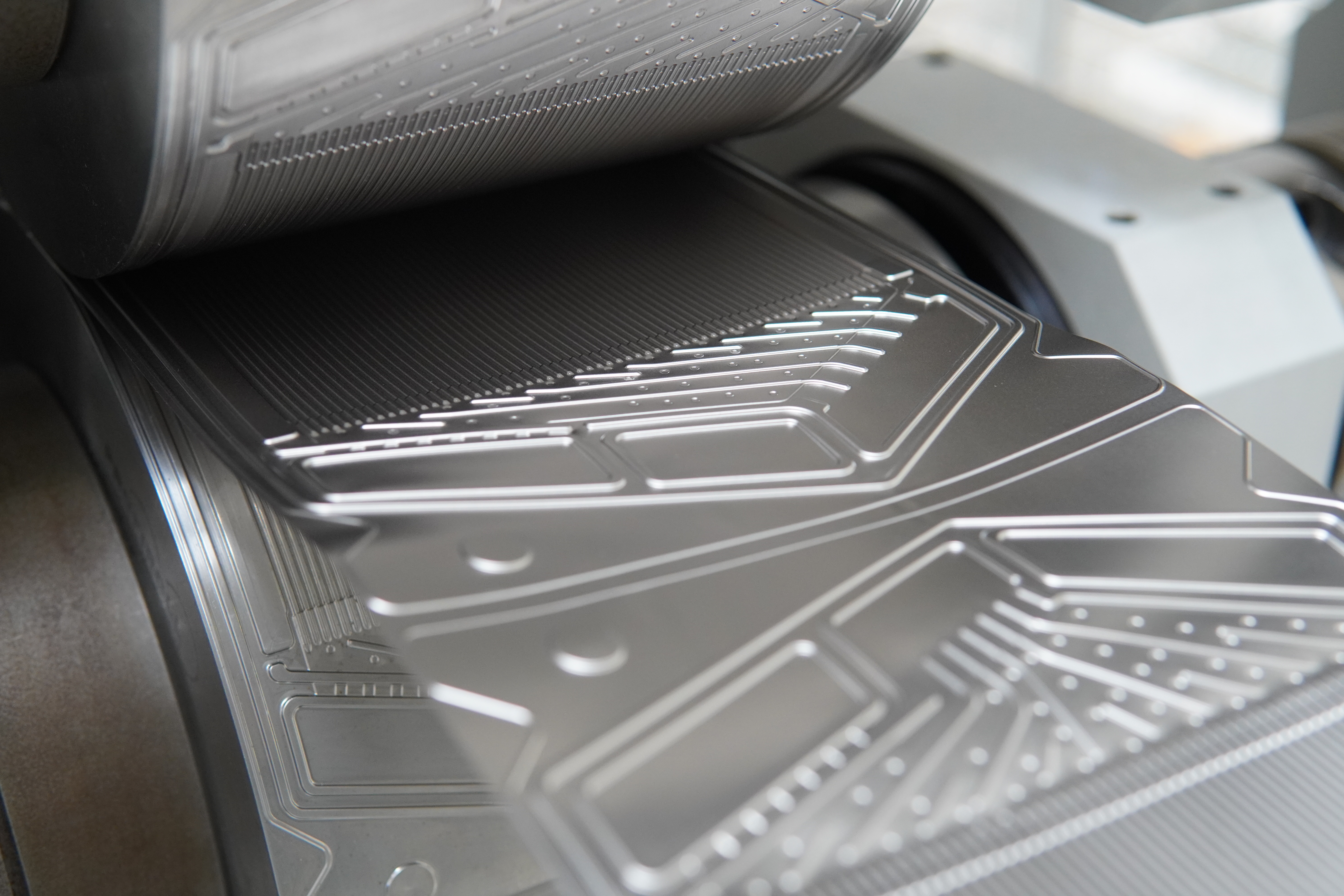
With the newly developed technology, the structure of the bipolar plate is embossed by a pair of rolls, between which the clamped, wafer-thin metal strip runs continuously. One forming roll acts as the punch, the other as the die. This continuous rolling process enables high-rate production.
Because the rolls forming the flow channels have almost only line contact with the workpiece, the incremental forming reduces process forces by an average factor of 10 compared with conventional hollow embossing. This allows for smaller, more economical equipment. A further advantage lies in the flexibility of the system: the number of roll sets required can be adapted individually to the bipolar-plate geometry.
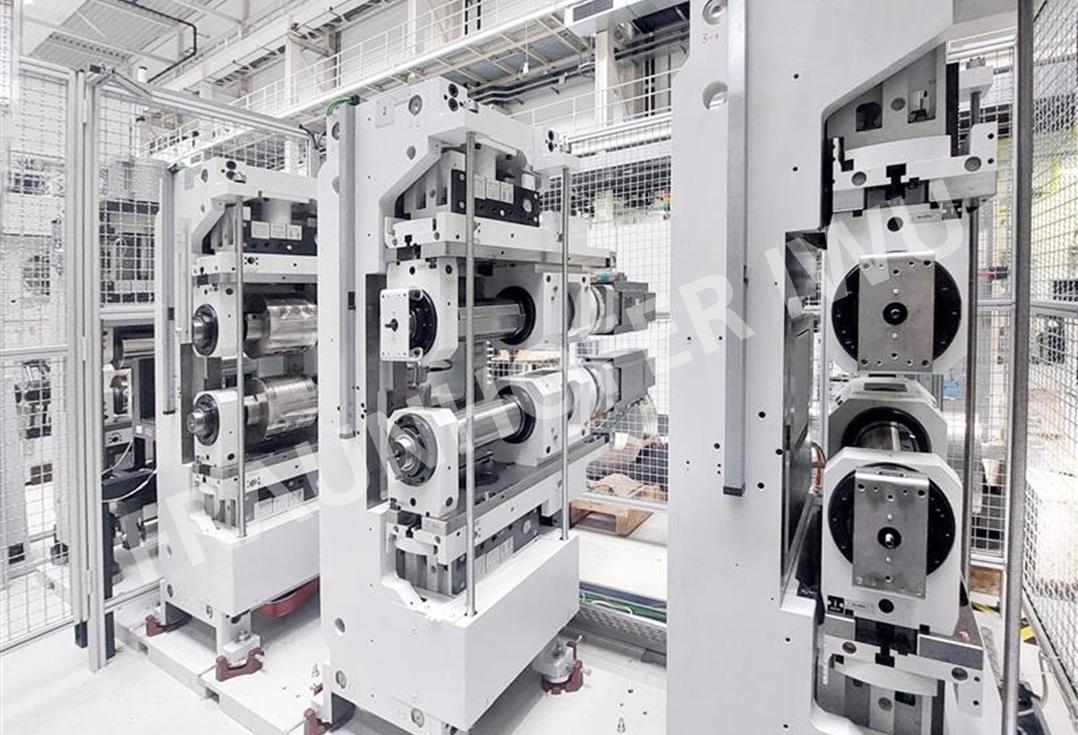
Production rates of >100 BPHP/min
The BPPflexROLL is designed as a flexible, modular forming system for high-rate production and achieves production rates of up to >100 BPHP/min. It can be adapted to different bipolar-plate geometries and production requirements. Its central element is a robust roll stand that ensures continuous transport of the metal strip through several forming stages.
The concept allows roll sets to be freely combined and extended, making the BPPflexROLL suitable both for development work and for near-series applications. Thanks to its compact, scalable design, the system integrates easily into existing production environments and can be expanded step by step.
The flexROLLmax provides a scaled-up version designed in particular for larger component geometries and greater material thicknesses (e.g. electrolyzer plates).
For compact, fine components
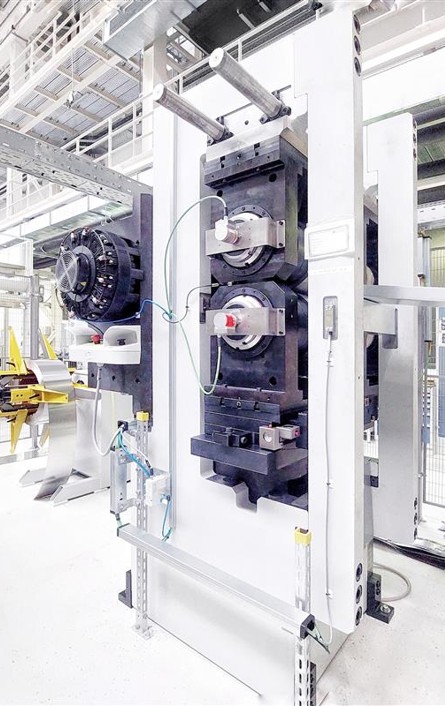
For larger components and material thicknesses
Contact us for a no-obligation conversation about your development ideas. We help you develop the technologies and processes of the future. Together we will find the best solution for your challenges.
Request a project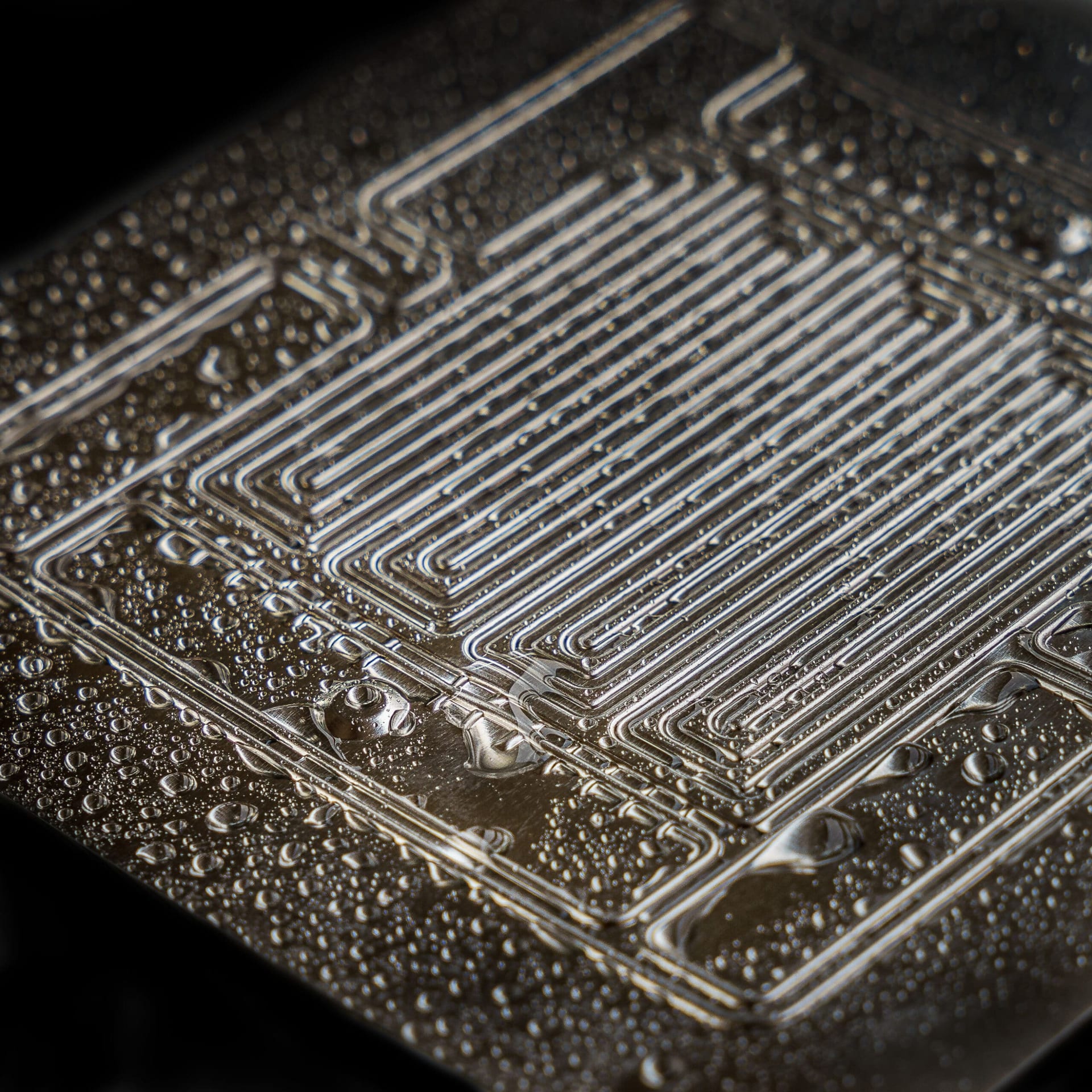
Forming complex metal geometries with uniform wall-thickness distribution.
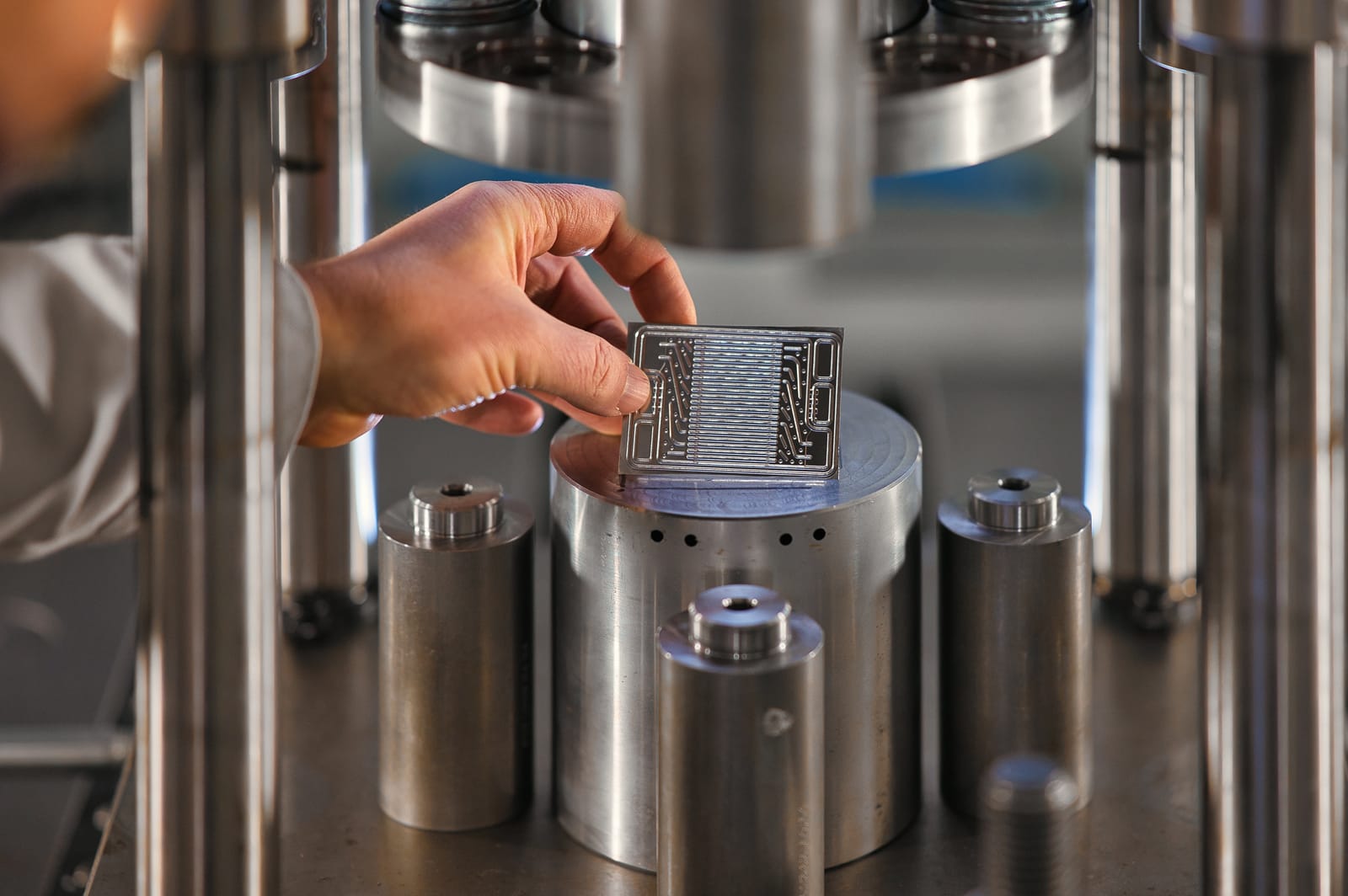
Precise forming of metallic components (e.g. bipolar plates).
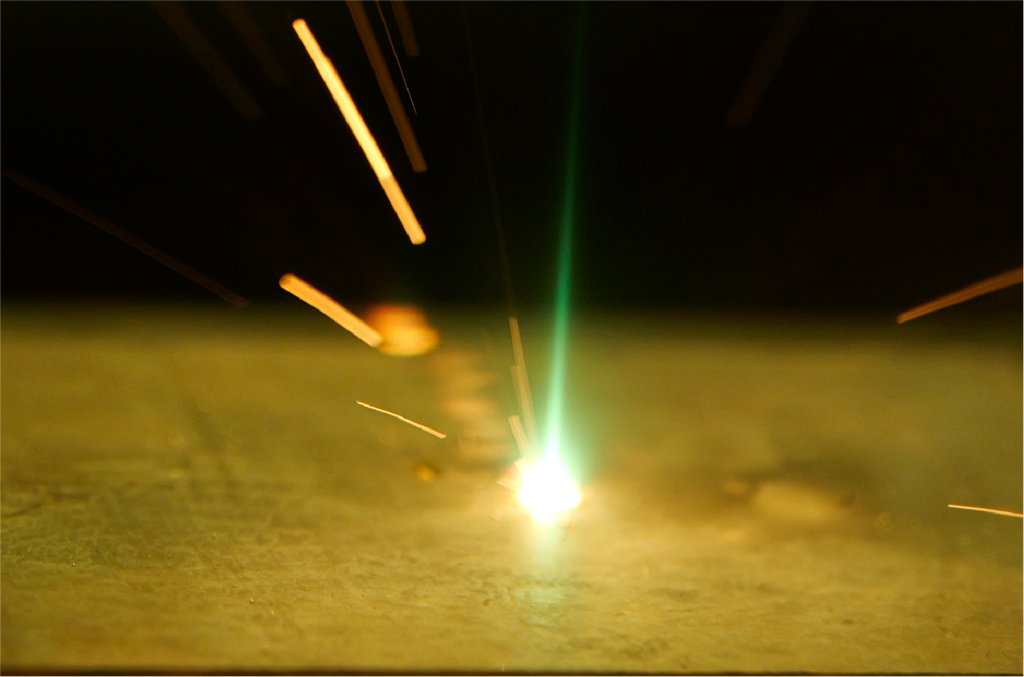
Laser and electron-beam welding for precision and scale.
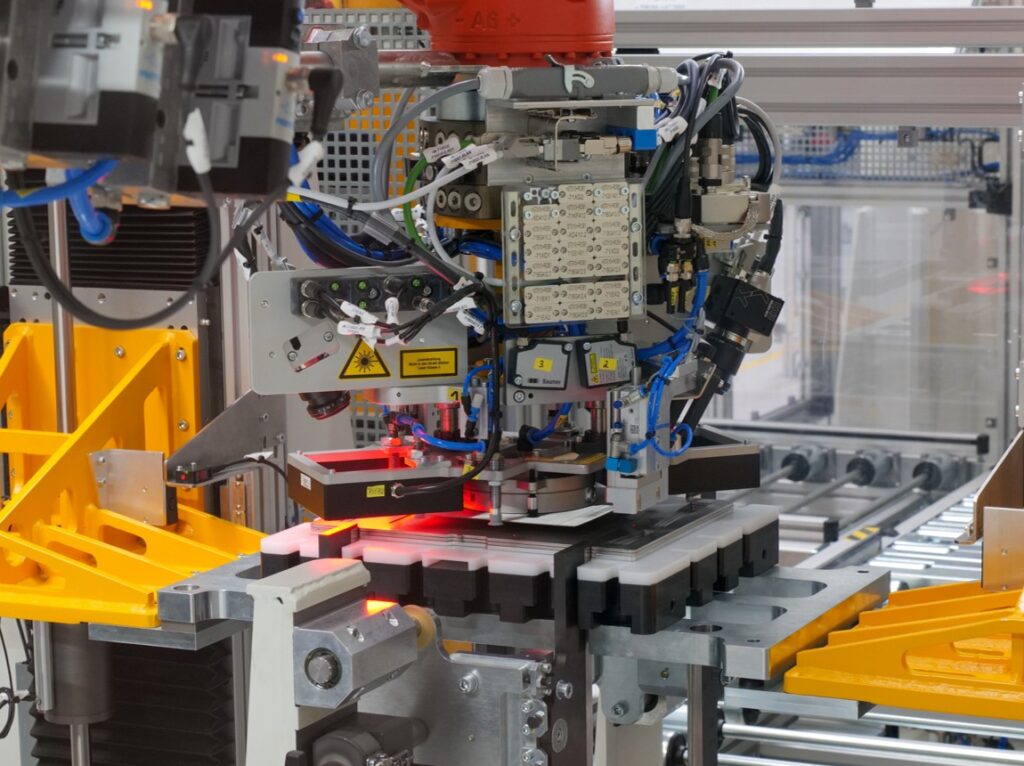
Automated assembly of PEM fuel-cell stacks.
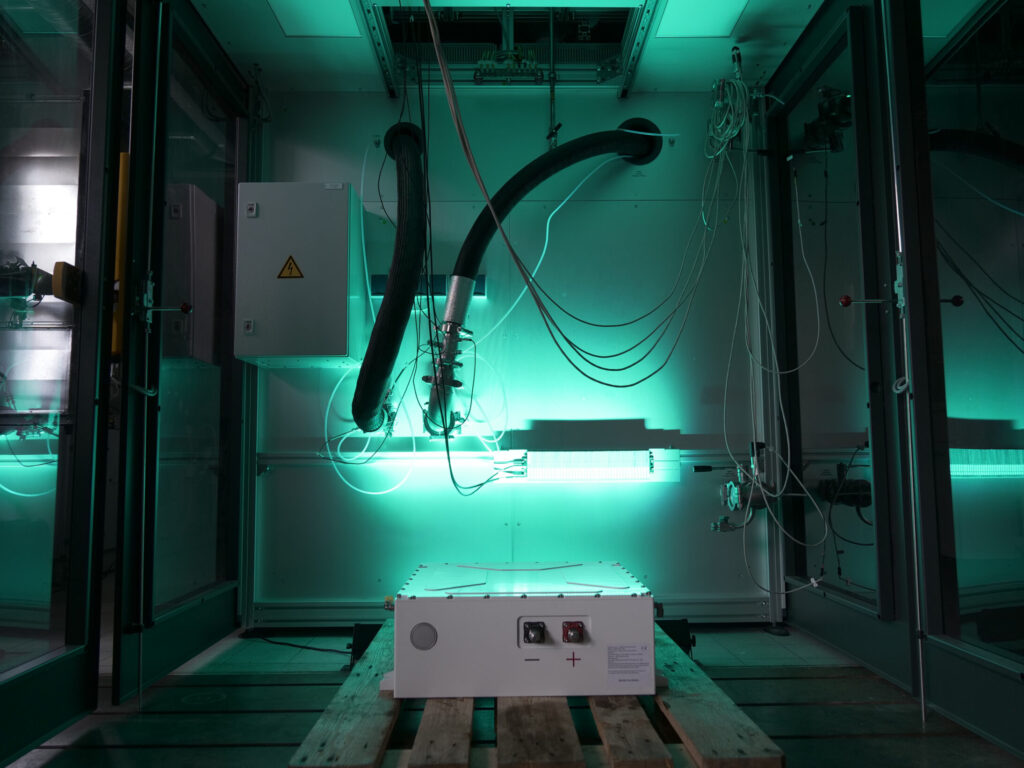
Characterization and testing of electrolyzer and fuel-cell stacks, including inline inspection.
Reuse of materials and components.