
Ultrasonic bath cleaning
- Frequency
- 28 kHz
- Heating power
- 4500 W
- Max. dimensions of part to be cleaned
- 560 × 450 × 260 mm
We characterise and test systems, components and processes across the entire development cycle and end of line. In several test laboratories and using proven concepts and analyses, we record quality-relevant criteria and examine your hydrogen system for safety, performance and reliability. Our quality processes are consistently aligned with industrial requirements and standards.
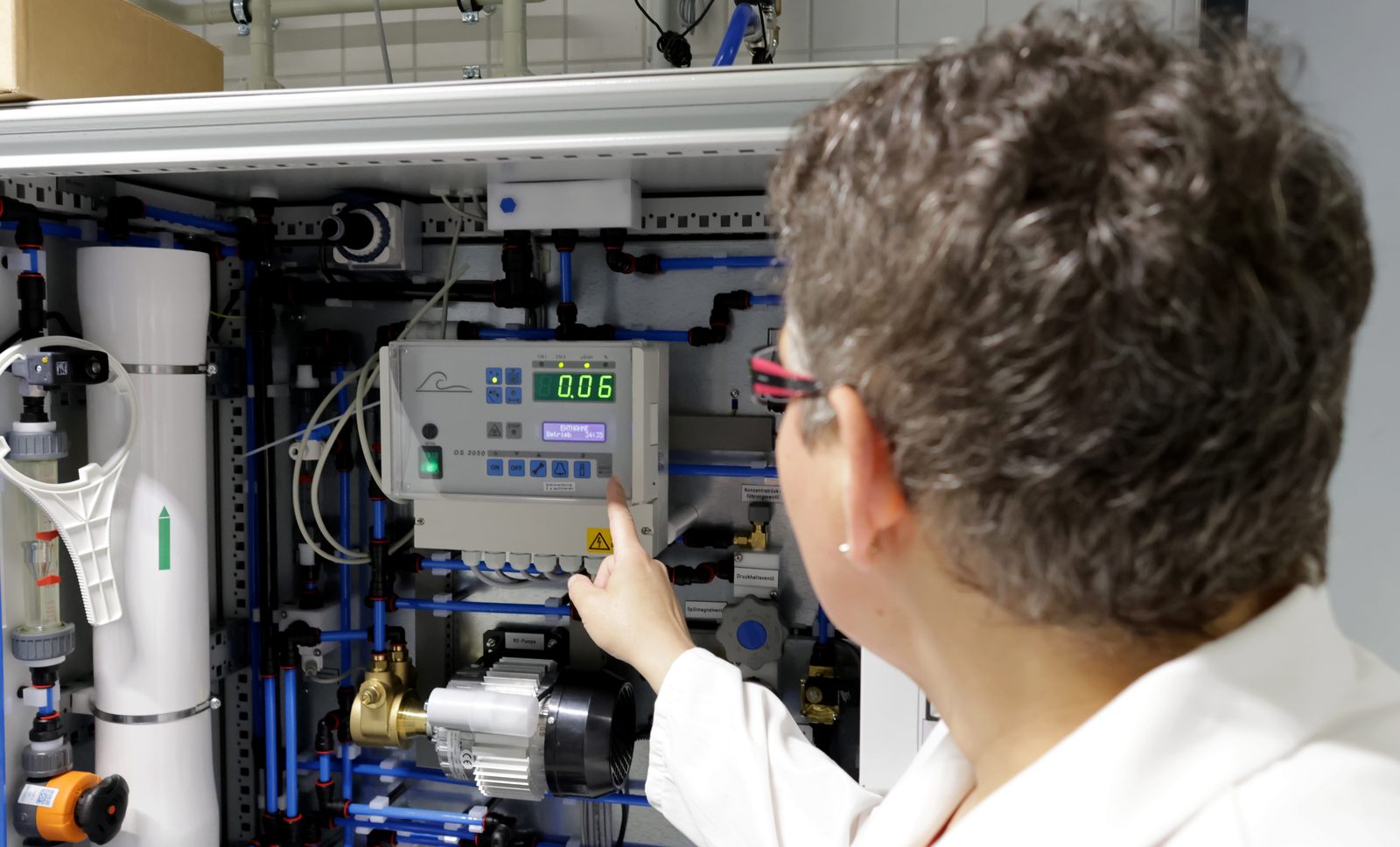
Test benches are not only used to check a manufacturing result — they also make it possible to validate the material concept before a product goes into series production. This is called ›Design for Manufacturing‹, which combines quality assurance with material analysis to reduce manufacturing costs and improve product functionality. An early-aligned material and production concept is essential, especially given the rapid ramp-up of large-scale hydrogen system manufacturing. For extensive test programmes under EU requirements (»harmonised standards«), US rules (»Department of Energy Technical Standards«, DoE) or individual customer requirements, more than »just« a test bench is now available. The result is a laboratory certified under § 15 of the German Industrial Safety Ordinance.
To ensure safety at all times, an automated gas monitoring system is an integral part of the hydrogen laboratory.
The hydrogen laboratory at Fraunhofer IWU offers various test benches for characterising and testing cells/short stacks, stacks and systems. Contact us to have your prototypes tested with us.
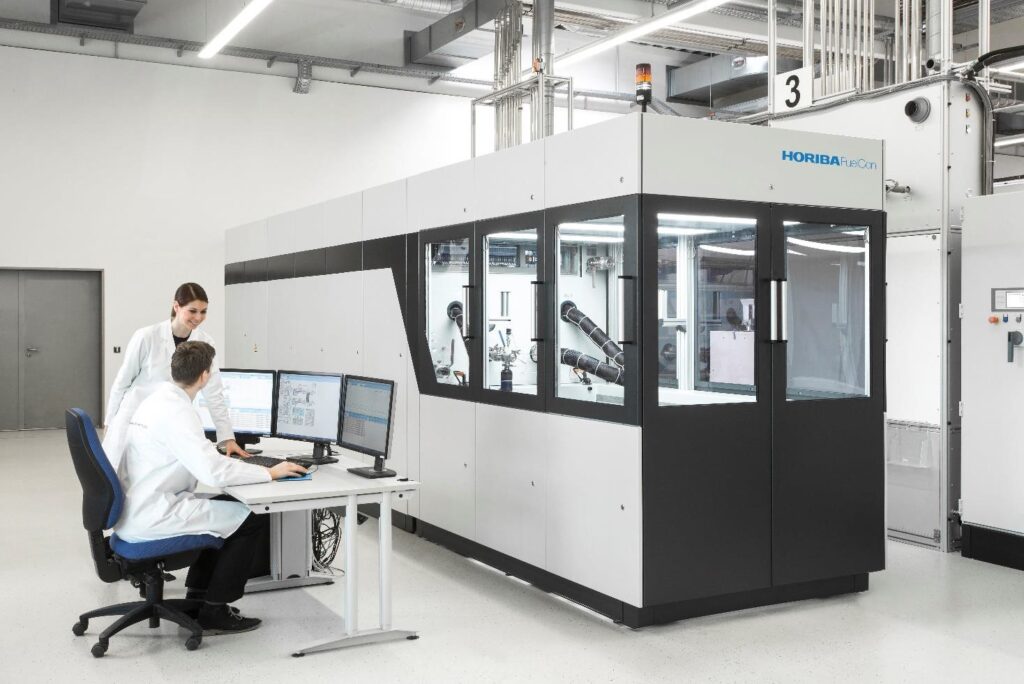
Testing of PEM fuel cell stacks, systems and system components in the kW range for automotive, rail, aviation and maritime applications.
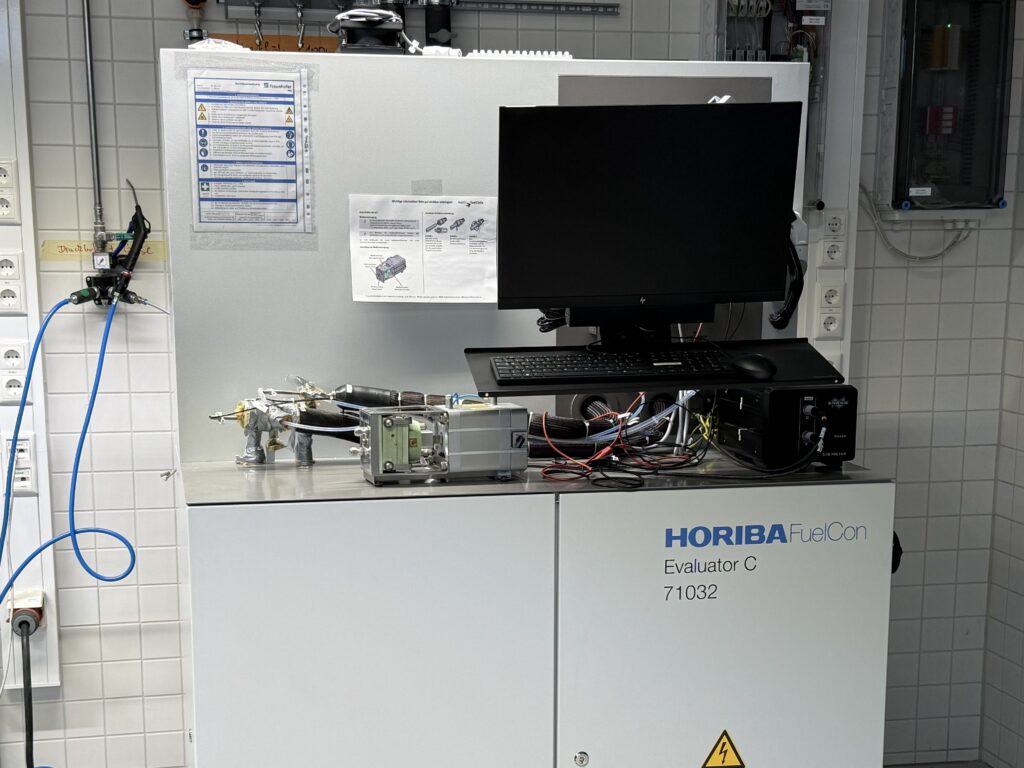
Testing of PEM fuel cell single cells as well as material tests.
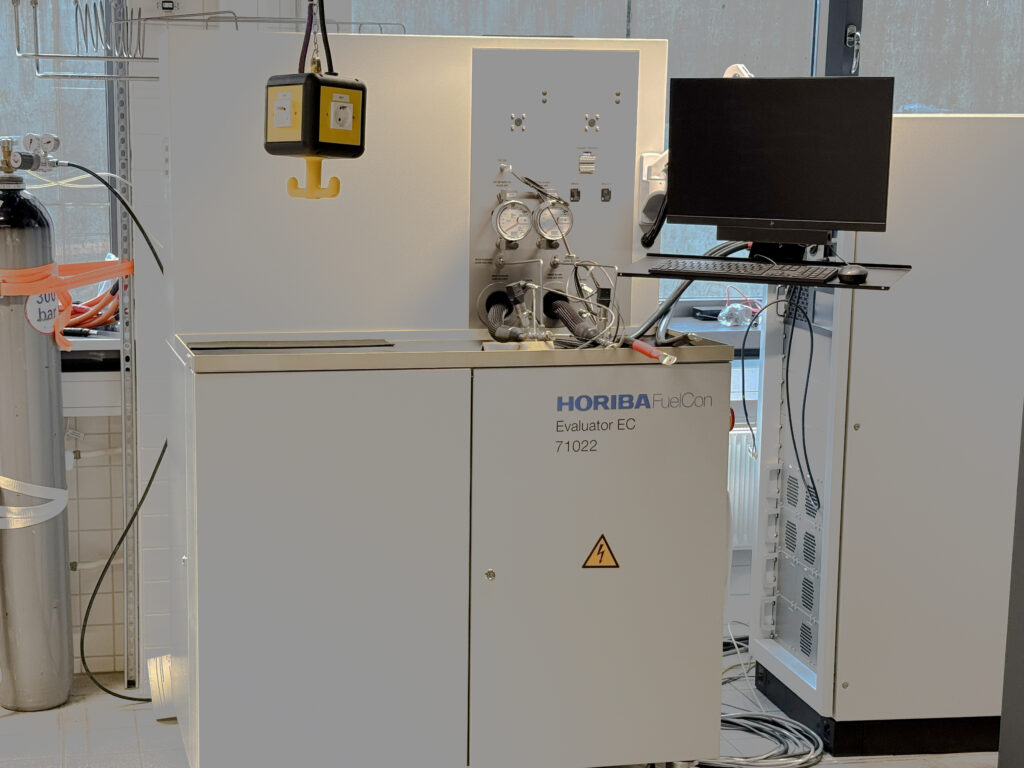
Testing of PEM electrolysis single cells and stacks.
In our hydrogen laboratory we test fuel cells up to 90 kW and electrolysers up to 1 kW. We check not only the stacks but the entire system including all balance-of-plant components such as cooling units, pumps and sensors. For precise fault finding we also perform impedance measurements to detect ageing processes early. Bring your prototypes to us and have them tested under real conditions. This optimises your manufacturing quality and the service life of your systems from the outset. Let us talk about your project.
Request a projectOur high-rate inline inspection system optimises your production with maximum precision at full speed. Thanks to intelligent evaluation, quality control takes place seamlessly within the process, immediately increasing your first-pass yield rate and avoiding costly rework. The system uses synergetic data fusion to reliably identify even hidden defects on flat components. Thanks to its modular design and enormous computing power, the system scales precisely to your individual requirements without impairing the material flow.
Inspection in < 1 second at up to 500 mm/s throughput speed.
Combination of 2D, 3D and eddy current for seamless detection.
Intelligent algorithms evaluate complex defect patterns in real time.
Parallel data processing up to 2.5 GByte/s for the highest resolutions.
Flexibly adaptable sub-stations, optimised for flat components.
Minimising scrap costs and increasing process stability.
Contact us for a no-obligation conversation about your development ideas. We help you develop the technologies and processes of the future. Together we will find the best solution for your challenges.
Request a projectDeveloping your system design with engineering and validation
View →Technology development of the required processes, equipment and tooling
View →Prototype manufacturing of components and systems
View →Material loops and recycling approaches for optimal resource efficiency
View →Advancing your capabilities in the H₂ value chain
View →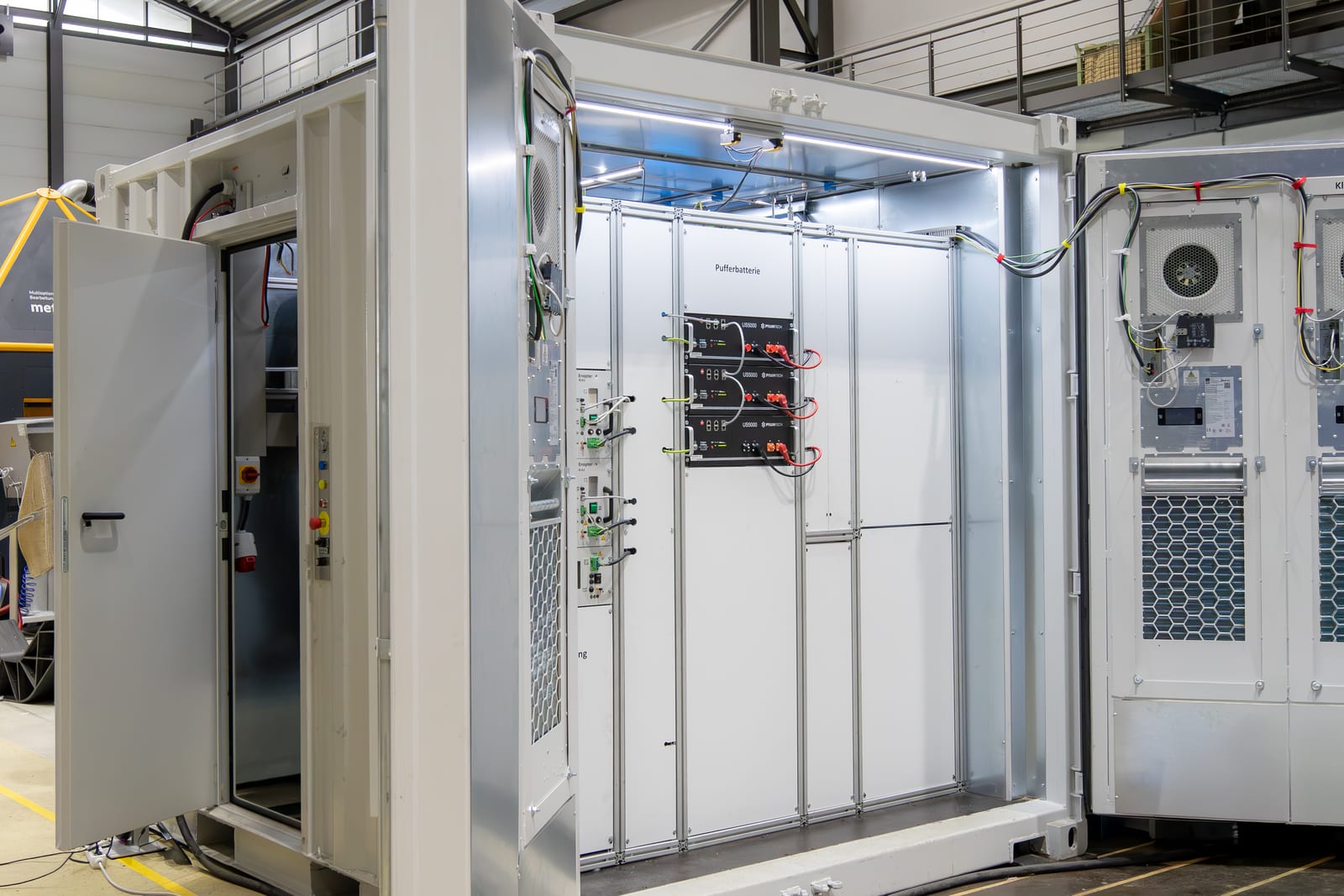
A container-based energy system that stores renewable energy and delivers it on demand.
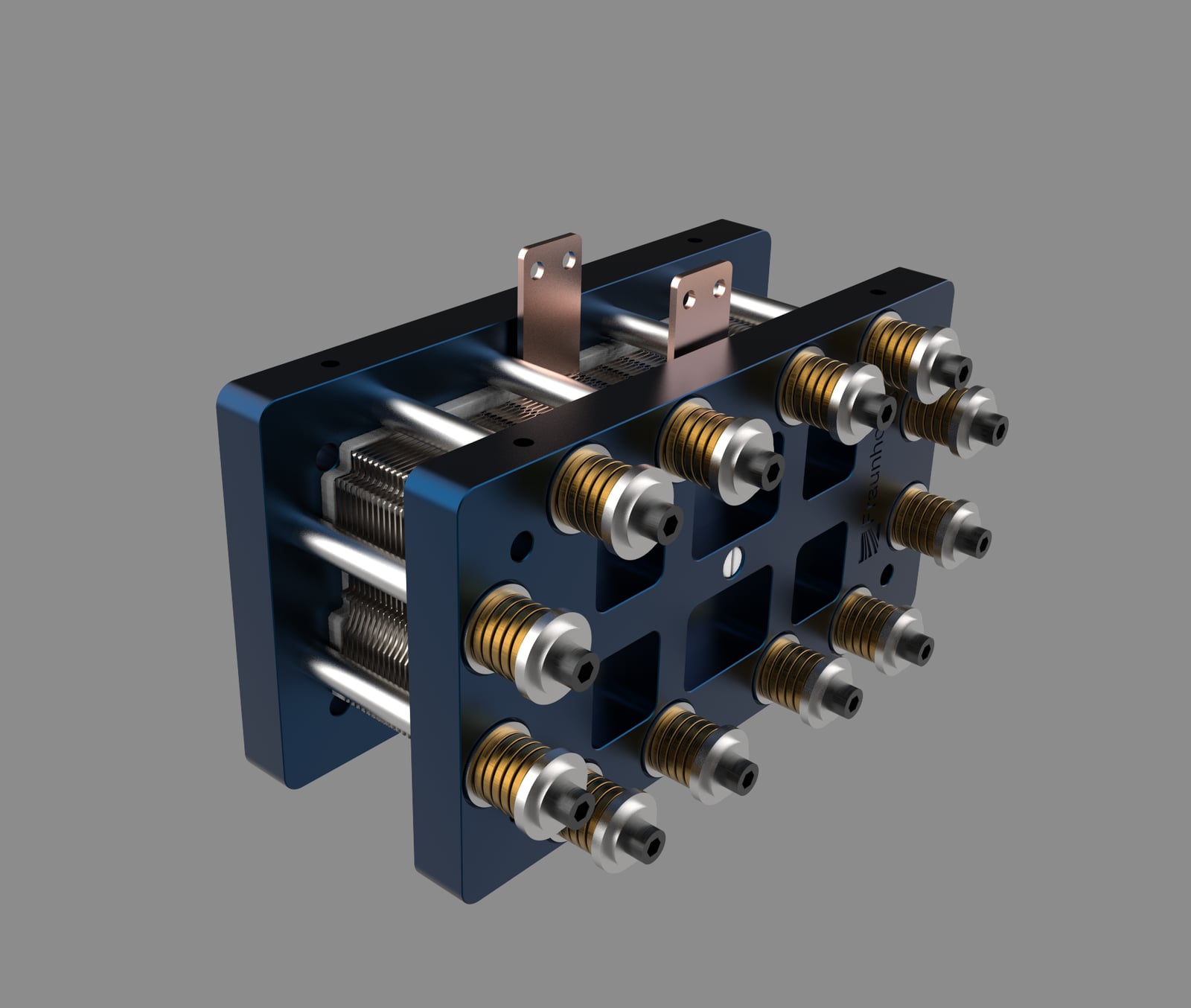
A reference stack for scaling electrolyzer production to industrial volumes.